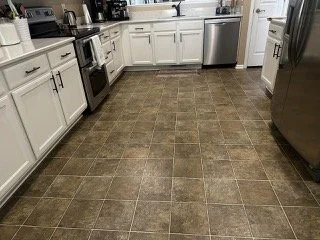
Flooring materials installed in Colorado homes prior to 1990—including 9"x9" and 12"x12" vinyl composition tiles (VCT), sheet vinyl, floor grout, setting thinset, and cutback adhesive (mastic)—frequently contain asbestos. Under Colorado Department of Public Health and Environment (CDPHE) Regulation No. 8, suspect flooring materials, regardless of age/date, must be sampled by a certified, licensed asbestos inspector prior to renovation or demolition. Colorado Asbestos Inspections, LLC provides 100% independent, conflict-free testing—we do not offer abatement or removal services, guaranteeing an unbiased inspection for your project.
1. Common Asbestos-Containing Flooring Materials in Colorado
When planning a renovation, flooring remodel, or basement finishing project across Denver, Fort Collins, Englewood, or the Front Range, identifying suspect flooring systems requires looking beyond the visible top surface. Asbestos was incorporated into both primary flooring components and backing adhesives:
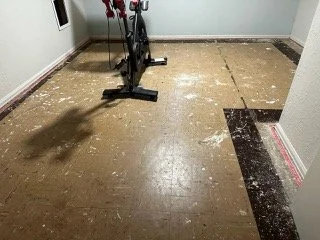
9" x 9" Vinyl Composition Tiles (VCT): A staple in mid-century homes. The standard 9x9 dimensions strongly indicate potential asbestos content in both the tile matrix and the underlying black cutback mastic adhesive.
12" x 12" Vinyl Tiles & Sheet Vinyl: Common in homes built up through the 1980s. Sheet vinyl often features a felt backing paper layer that is highly friable when scraped or torn.
Adhesive Mastic & Cutback Glue: The dark brown or black asphaltic glue used under older tile and linoleum frequently contains chrysotile asbestos. Even if new flooring was installed over old tile, the historical mastic layer underneath remains a hazard during demolition.
Tile Grout, Thinset, and Mortar Beds: Often overlooked in bathroom and entryway remodels, ceramic tile setting materials, subfloor leveling underlayments, grout, and thinset can contain asbestos.
2. Why Intrusive Multi-Layer Bulk Sampling Matters
Visual inspection alone cannot confirm the presence of microscopic asbestos fibers. Accurate assessment requires taking physical bulk samples from all distinct layers of the flooring assembly:
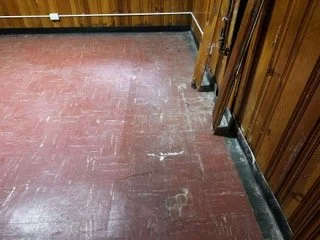
Top Surface Layer: Testing the tile or sheet vinyl.
Adhesive / Mastic Layer: Scraping a clean sample of the glue line beneath the tile.
Underlayment / Felt Backing: Sampling paper, felt, or fiberboard backing.
Setting Bed / Grout: Sampling mortar, thinset, or grout in wet areas.
Field Tip: In many Front Range homes, property owners discover multiple layers of legacy flooring beneath modern carpet or laminate. Every historical layer must be evaluated to ensure full compliance with CDPHE guidelines and local municipal building permits.
3. CDPHE Regulations & Permitting in Colorado
In Colorado, the Department of Public Health and Environment (CDPHE) governs asbestos handling under Regulation No. 8 (Part B).
Limited Inspections: Designed for specific, targeted scope-of-work projects (e.g., a single bathroom remodel in Englewood or replacing kitchen floor tile in Fort Collins).
Comprehensive Inspections: Reserved strictly for full, total-structure demolition permits.
Trigger Levels: Any disturbance exceeding 32 square feet, 50 linear feet, or the volume of a 55-gallon drum triggers state abatement and containment requirements if materials test above 1% asbestos.
4. The Value of an Independent, Conflict-Free Inspector
Many environmental companies offer both testing and abatement services. This dual role creates an inherent conflict of interest, as an abatement contractor profits from finding asbestos that requires expensive removal.
Colorado Asbestos Inspections, LLC operates on a 100% independent model:
Unbiased Testing: We do not offer abatement, removal, or remediation services.
Objective Results: Our sole purpose is to provide clear, accredited laboratory analysis and permit-ready documentation.
Cost Protection: We ensure you only pay for abatement if asbestos is genuinely present and exceeds state thresholds.
5. Safe Handling & Next Steps Before Renovation
If you encounter suspect 9" floor tile, sheet vinyl, or old floor glue in your home or commercial space:
Do Not Scrape, Sand, or Grind: Mechanical grinding or aggressive pulling releases friable fibers into the indoor air environment.
Leave Flooring Intact: If undisturbed and covered, non-friable floor tile poses minimal risk.
Schedule a Certified Inspection: Have a CDPHE-certified inspector collect samples using wet-methods and proper containment techniques.
Need an Independent Flooring Asbestos Inspection?
Whether you are remodeling a vintage bathroom in Fort Collins or opening up a commercial floor space in Englewood, ensure your project is safe and permit-ready.
Contact Colorado Asbestos Inspections, LLC today to schedule your certified testing.