Do You Need an Asbestos Test for That Colorado Garage Demolition? (Yes, Probably.)
If you are planning to tear down an old detached garage, workshop, or outbuilding on your Front Range property, you are likely focusing on the logistics: hiring an excavator, scheduling a roll-off dumpster, and getting your structural layout cleared.
However, before a single piece of heavy machinery touches your property, there is a strict regulatory roadblock you have to clear first. In Colorado, your local city or county building department will not issue a demolition permit without a state-certified, permit-ready asbestos inspection report.
Here is the technical reality of why the State of Colorado requires this, what inspectors look for, and how your garage material type impacts the legal process.
Why Colorado Law Cares About Your Garage Teardown
Under Colorado Regulation 8, the state enforces strict protocols regarding the disturbance of building materials. Asbestos was heavily integrated into construction materials for decades due to its fireproofing and insulative properties. When a building is demolished, any hidden asbestos is crushed, shattered, and made friable—meaning the microscopic fibers become airborne and easily inhaled.
To protect the safety of the neighborhood, demolition crews, and your family, the state requires a comprehensive, certified inspection before any demolition occurs. This rule applies to residential properties regardless of who is performing the work.
A Note on Testing Nature: True asbestos sampling is inherently intrusive by nature. To guarantee legal safety and provide accurate lab data, an inspector must physically cut, core, or scrape hidden layers of suspect materials. It is an intrusive process, but it is the only way to secure a definitive, legally binding permit clearance.
Field Report: Material Type Does Not Exempt Your Structure
A common misconception among property owners across the Denver Metro and Northern Colorado areas is that certain styles of garages are automatically exempt from testing. Many assume that if a building is primarily brick or constructed out of modern metal panels, it doesn't pose an asbestos risk.
Recent field inspections across our service area demonstrate exactly why the state mandates testing across all structural types:
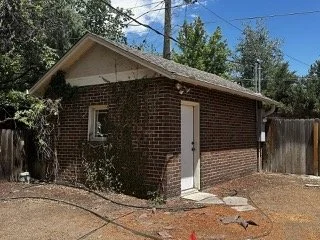
1. Brick & Masonry Garages
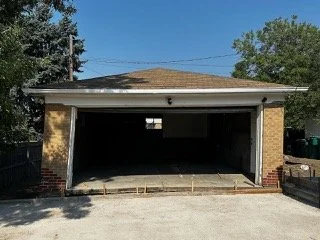
While the primary structural walls may be brick, a garage is full of secondary component materials. During a recent inspection of a brick residential garage in Denver, sampling parameters had to focus on elements that property owners routinely overlook—such as old exterior door caulking, window glazing compounds, and roof shingles.
2. Modern Metal Garages
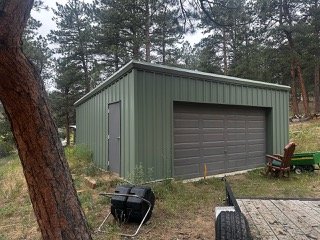
We recently evaluated a detached metal garage up in the Boulder area. Even though the exterior siding and framing are modern metal, these structures consistently contain hidden suspect materials. Our inspection required testing the structural panel adhesives, vapor barriers, flashing sealants, and specialized roof coatings that must be certified clear before a demolition permit can be signed off.
3. Compromised or Leaning Structures
When an old garage is structurally failing—such as a heavily leaning timber-and-brick garage we inspected this month—the law does not change. Even if a building is deemed an safety hazard or is actively falling over, an intrusive inspection must be conducted to ensure that pulling the structure down won't inadvertently release hazardous fibers into the surrounding environment.
What Suspect Materials Are Hiding in a Garage?
When we walk into a residential garage or workshop to conduct a pre-demolition survey, we are looking at a highly specific list of legacy construction components. These include:
Roofing Materials: Multi-layered asphalt shingles, roll roofing, tar, and underlying roof felts.
Siding & Transite: Older cementitious siding panels (Transite boards) which are notoriously high in asbestos content.
Wall & Ceiling Systems: Interior drywall textures, joint compounds, or legacy pop-corn ceilings finishes if the garage was partially finished or used as a workshop.
Electrical Elements: Older cloth-wrapped wiring insulation and electrical backing boards.
Insulation: Loose-fill attic insulation or legacy vermiculite.
Get a Conflict-Free Asbestos Inspection
If your garage demolition project is stuck at the permit office, we can help you get back on track.
At Colorado Asbestos Inspections, LLC, we believe in integrity through absolute independence. We specialize exclusively in testing and inspections; we do not perform abatement or removal. Because we have no financial interest in finding asbestos or selling you a costly cleanup service, you can trust that our final report is a 100% unbiased, accurate assessment of your property.
We proudly serve homeowners and local contractors across the entire Front Range corridor, from Fort Collins and Greeley down through the Denver Metro area and Castle Rock.
Need a permit-ready asbestos report for your garage demolition?
[Contact Colorado Asbestos Inspections, LLC today to schedule your field inspection.]