Asbestos Identification in Popcorn Ceilings:
How to Identify Asbestos in Popcorn Ceilings
Planning to finally scrape that dated popcorn ceiling? Before you pick up a scraper, a hidden danger could be lurking in homes built before the mid-1980s. This danger is asbestos, and understanding it is crucial for keeping your family safe during any renovation.
It’s easy to think of asbestos as some kind of industrial chemical, but the truth is surprising: it’s a natural mineral pulled directly from the earth. For decades, it was considered a “magic mineral” in construction because its fibrous crystals possessed a unique combination of superpowers:
Fire-resistant
Chemical-resistant
Incredible insulator
Strong and durable
Because of these properties, asbestos was mixed into more than 3,000 common building materials, according to Environmental Protection Agency (EPA) estimates. The fibers are microscopic and were blended into everything from cement to vinyl tiles, which makes it impossible to answer the question, “What does asbestos look like?” simply by eye. This widespread use before the ban on many asbestos products is why identifying potential hazards in your home is so critical.
The Single Most Important Rule: You Can't Spot Asbestos by Sight
Many homeowners ask, “What does asbestos look like?” The simple and safest answer is that it doesn’t look like any one thing. Asbestos is a mineral composed of microscopic fibers, completely invisible to the naked eye. For decades, it was used as a hidden additive, mixed into thousands of different building materials to add strength and fire resistance. Think of it less like a distinct material you can spot and more like a secret ingredient that was baked into a final product.
This creates a dangerous problem for visual asbestos identification. A 1970s vinyl floor tile made with asbestos can look identical to a harmless tile made without it. The same is true for ceiling textures, insulation, and siding. There is absolutely no unique color, pattern, or texture that confirms the presence of asbestos. Guessing whether a material contains it is not only unreliable; it’s a risk you should never take.
Because visual identification is impossible, the only way to be 100% certain is to have samples of the suspected material tested by a certified laboratory.
Where Asbestos Hides: Common Materials to Watch For
While you can't be certain without a lab test, asbestos was a creature of habit in the construction industry. Builders repeatedly used it in the same types of materials for decades, which means you can learn to spot the potential hiding spots in homes built before the mid-1980s. If your home falls into that age range, think of this as a guided tour of the most common places to be cautious.
Pay close attention if you encounter any of these materials during cleaning or renovations:
Popcorn Ceilings: That bumpy, cottage-cheese texture sprayed on ceilings is a classic example of suspected asbestos in ceiling tiles or spray-on finishes.
9x9 Inch Floor Tiles: Before larger tile sizes became standard, 9x9 inch vinyl tiles were extremely common. The black, tar-like adhesive (mastic) used to glue them down can also be a source of asbestos.
Pipe Insulation: In basements and crawlspaces, look for a chalky, plaster-like wrapping or a deteriorating cardboard or fabric casing around old pipes, especially at elbows and joints. Visually identifying asbestos pipe insulation is impossible, but this form is a major red flag.
Attic Insulation: If you see loose, pebbly insulation that looks like small, lightweight rocks (often with a silver or gold sheen), it could be vermiculite insulation containing asbestos.
Siding and Shingles: Older homes may have siding or roofing shingles that look like brittle, thin cement. This is quite different from modern, more flexible fiber cement siding and should be handled with care.
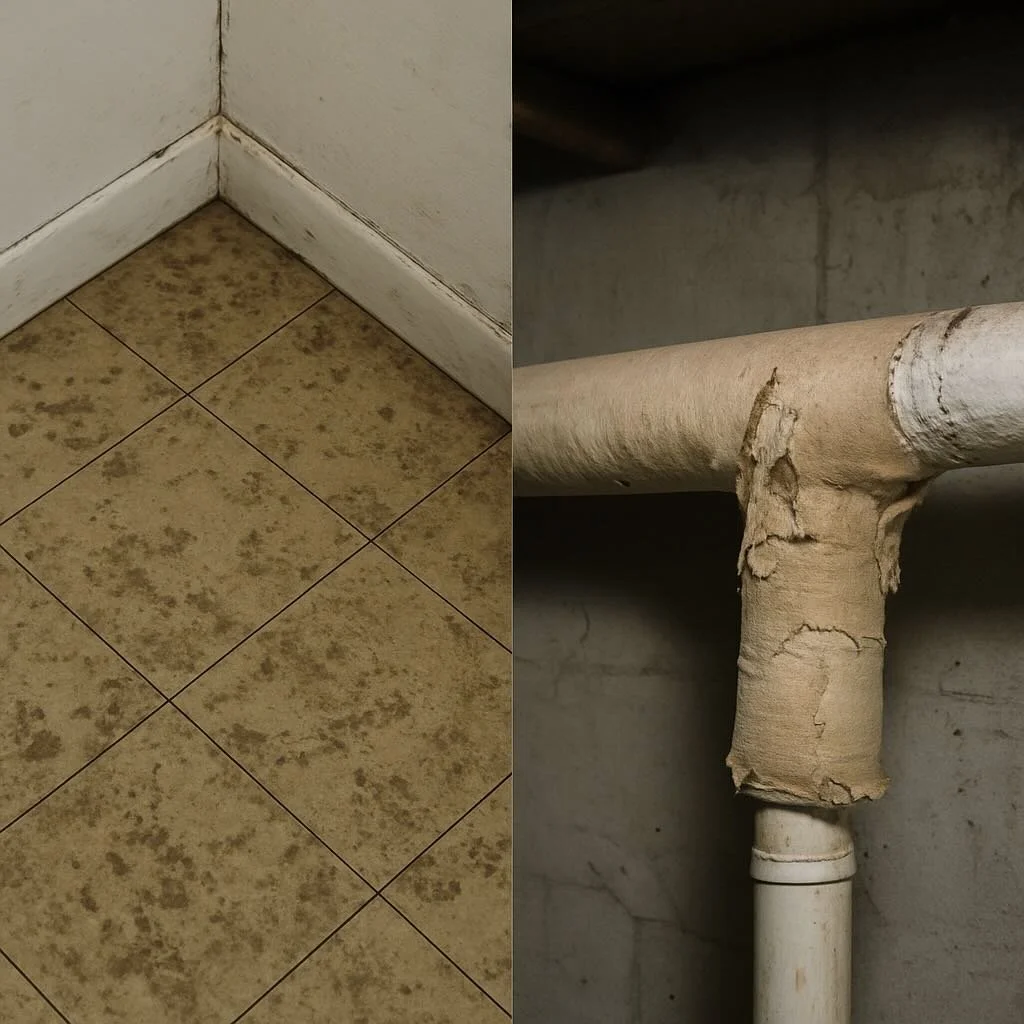
9 floor tiles and pipe wrap
Spotting one of these materials doesn't automatically mean your home is unsafe. The actual risk depends entirely on the material's condition.
Understanding Your Risk: Friable vs. Non-Friable Asbestos
Just because a material in your home might contain asbestos doesn't mean it's an immediate threat. After identifying a potential asbestos-containing material, the next step is to evaluate its condition. The risk level boils down to one critical factor: whether the material can easily release its fibers into the air.
This is the difference between friable (FRY-uh-bull) and non-friable material. Friable simply means the material is soft, brittle, or damaged enough that it can be crumbled into dust with simple hand pressure. That deteriorating, fabric-like insulation wrapped around old pipes is a perfect example. Friable materials are the most dangerous because their microscopic fibers can become airborne with the slightest disturbance, creating a serious mesothelioma risk from exposure if inhaled.
The opposite is non-friable material, where asbestos fibers are locked tightly within a solid, stable product. Think of intact 9x9 inch vinyl floor tiles or solid cement siding. So, is it safe to live in a house with asbestos? If the material is non-friable and in good condition, it is not actively releasing fibers and is considered low-risk. The danger arises only when it’s disturbed.
Knowing the difference between friable and non-friable asbestos is key to avoiding panic. An intact, solid material is a world away from a crumbling, dusty one. The hazard truly begins when you saw, drill, sand, or break these materials, turning something stable into an airborne risk.
The Risks of DIY Asbestos Test Kits
A quick online search reveals dozens of "DIY asbestos test kits," and their low price can be tempting. While the convenience of these kits are tempting, asbestos results from DIY kits are not accepted by contractors and permitting offices and are not in compliance with testing to state regulations.
Ultimately, the few hundred dollars for a professional survey is a small investment in your family’s long-term health and peace of mind. Considering the stakes, relying on professional testing is the only truly safe and responsible choice.
Found Suspected Asbestos?
Whether you’re mid-renovation or discovered crumbling material after a leak, finding what you think might be asbestos can be alarming. If you're staring at damaged pipe wrap or suspected asbestos in ceiling tiles, resist the powerful urge to clean it up or inspect it closer. The most critical action is to do nothing that could disturb the material and release invisible fibers into the air.
Contacting a state certified asbestos inspector replaces fear with a clear, controlled path forward. They have the professional training for proper asbestos identification and can provide a factual assessment of the situation, ensuring your home remains safe.
A Confident Approach to Asbestos Safety
The word "asbestos" can cause uncertainty, but an informed approach transforms fear into practical awareness. The key is not to identify asbestos yourself, but to recognize the types of materials from a specific era that warrant caution.
A material's condition is the primary indicator of risk—solid and contained is far different from damaged and friable. Often, it is safe to live in a house with asbestos as long as it remains undisturbed. But should that change, or if you're planning a renovation, your path is clear.
You have the safest possible plan: call a professional for an asbestos survey. This simple, powerful strategy empowers you to be the calm and confident guardian of your home’s safety.