Asbestos in Flooring: Identification, Risks, and Safe Removal Guide
Asbestos in flooring materials is a significant concern for homeowners, especially those living in properties built before the late 1980s. While once prized for its fire resistance and durability, we now know that disturbed asbestos poses severe health risks.
This guide covers how to identify asbestos-containing materials (ACMs), the health risks involved, and how to manage them safely during a renovation.
What is Asbestos and Why is it in My Floor?
Asbestos is a naturally occurring mineral composed of flexible, heat-resistant fibers. Because it was affordable and nearly indestructible, manufacturers used it extensively in construction until the EPA and CPSC began enacting bans in the late 1970s.
In flooring, asbestos was primarily used for:
Enhanced Durability: Making tiles resistant to cracks and wear.
Fire Resistance: Providing a safety barrier in kitchens and around heaters.
Affordability: Keeping production costs low for mass-market housing.
Common Types of Asbestos-Containing Flooring
Not all old floors contain asbestos, but certain types are high-risk. If your home was built between 1920 and 1986, you should treat the following materials as "suspect" until tested (Colorado regulation 8 requires that all suspect building materials must be tested regardless of age):
1. 9" x 9" Vinyl Floor Tiles
One of the most common indicators of asbestos is the size of the tile. While 12" tiles can contain asbestos, the 9-inch square tile is a classic hallmark of asbestos-containing material.
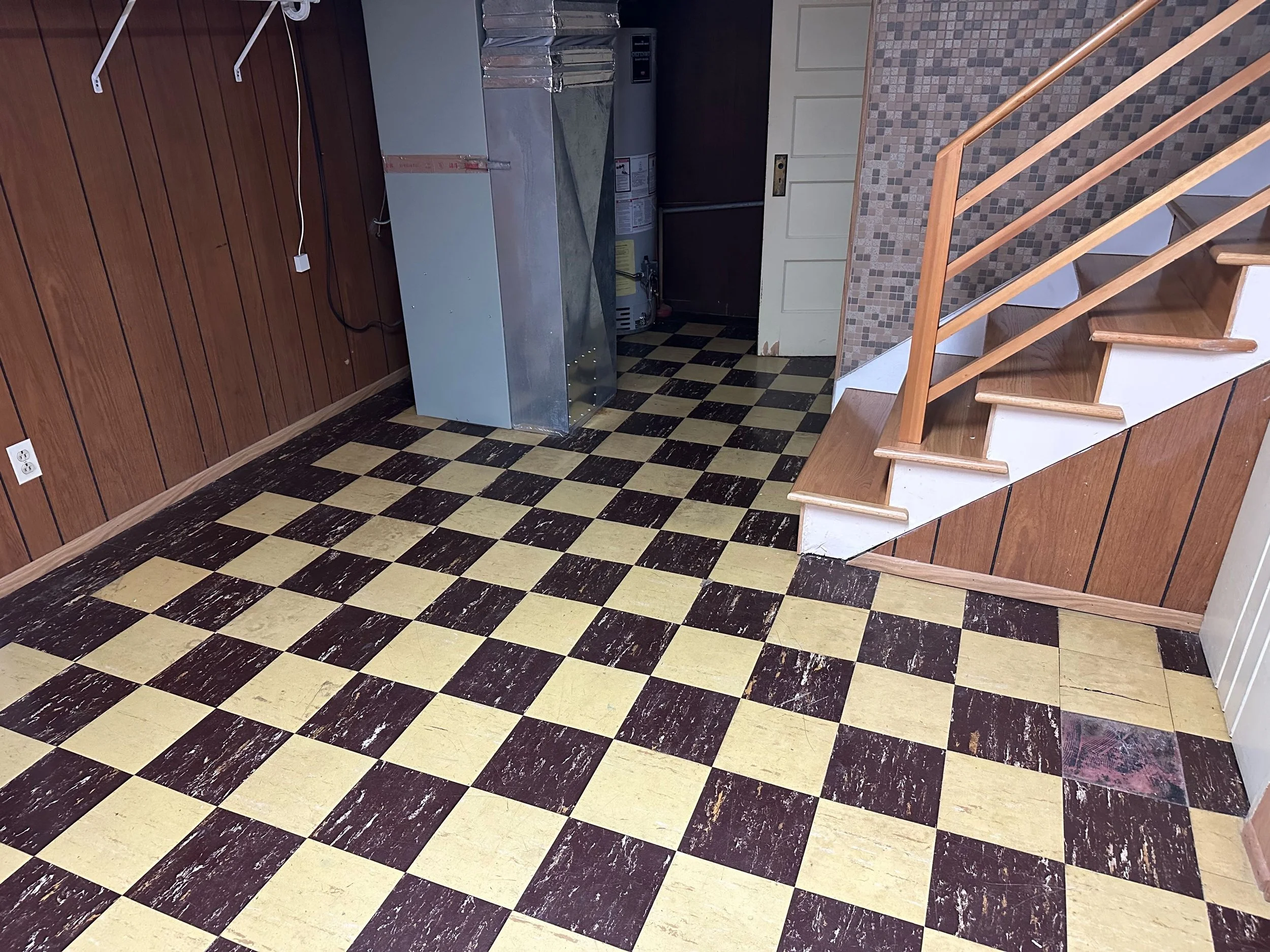
9 × 9 floor tiles
2. Sheet Vinyl with "Paper" Backing
Many old sheet vinyl floors (linoleum-style) used a white, gray, or yellowish felt backing made of nearly pure chrysotile asbestos. If this backing is torn or scraped, it releases a high concentration of fibers.
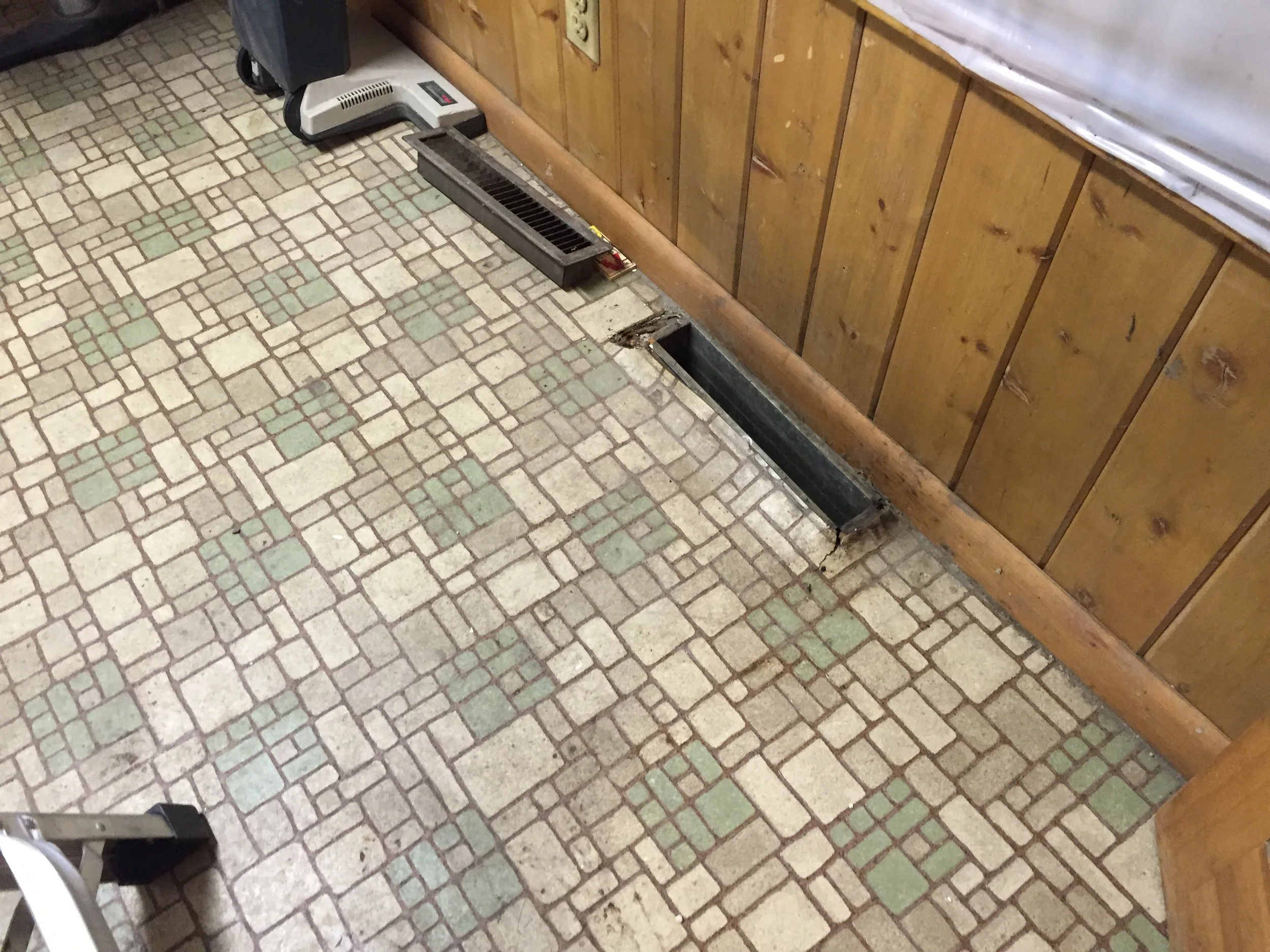
Linoleum
3. Black Mastic (Adhesive)
Even if the tile itself is safe, the glue used to stick it to the subfloor—often a thick, black adhesive known as black mastic—frequently contains asbestos.
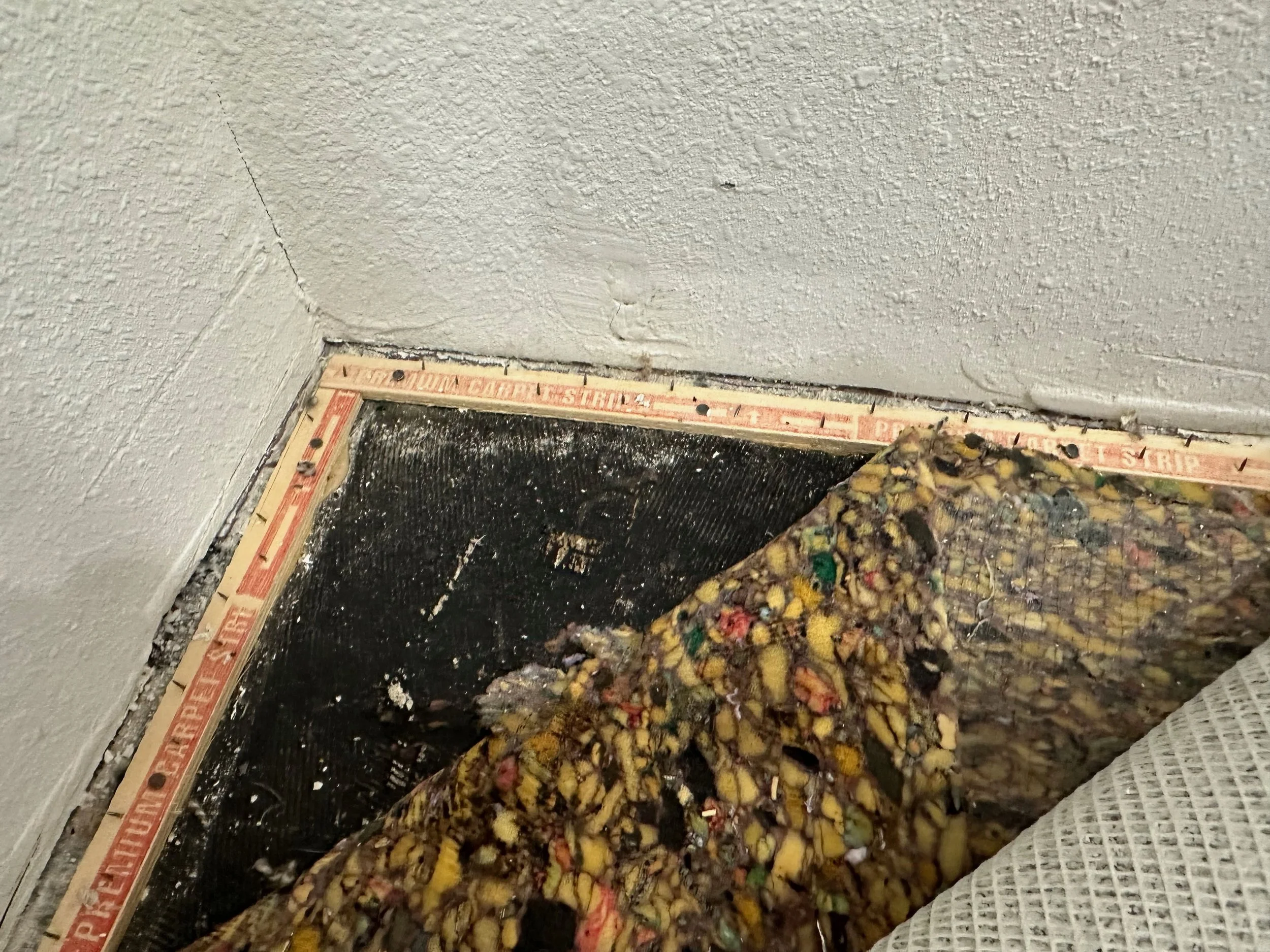
Black mastic
Health Risks: Why Disturbing Asbestos is Dangerous
Asbestos is "friable" when it can be crumbled by hand pressure, turning into a fine dust. When inhaled, these microscopic fibers lodge in the lung tissue, leading to:
Asbestosis: Permanent lung scarring that makes breathing difficult.
Mesothelioma: A rare, aggressive cancer of the chest and abdominal lining.
Lung Cancer: Significantly higher risk for smokers exposed to asbestos.
Important: Symptoms of asbestos-related diseases often take 15 to 40 years to appear. Prevention today is the only cure.
How to Identify Asbestos Flooring
You cannot identify asbestos by sight alone. However, you can look for these warning signs:
Age of Home: Built before 1980.
Tile Size: 9" x 9" dimensions.
Appearance: Oily or discolored spots on the tile (signaling degradation of the binder).
Backing: A gray or white "paper" layer underneath sheet flooring.
Professional Asbestos Testing
To be 100% certain, you must hire a certified asbestos inspector or use a DIY Mail-in Test Kit (results from DIY test kits will not be accepted by local permitting offices, contractors or the the state of Colorado).
What to Do If You Find Asbestos in Your Home
If you suspect your floor contains asbestos, do not sand, scrape, or power-wash it.
Option 1: Encapsulation
If the floor is in good condition, the safest and cheapest method is to cover it. You can install new luxury vinyl plank (LVP), laminate, or carpet directly over the asbestos tile. Although allowed by the state of Colorado, contractors may not be able to fulfill this option for various reasons such as a potential for unstable base, compromising of warranties, hidden damage, height issues, liability and more. Check with your contractor to see if this is a suitable option.
Option 2: Professional Abatement
If the flooring is crumbling (non-intact) or you are performing a major renovation that requires subfloor access, then hiring a licensed asbestos abatement contractor may be the best option.
The Abatement Process Includes:
Sealing the area with plastic sheeting and negative air pressure.
Using HEPA-filtered vacuums and wet-stripping methods.
Proper Disposal at a hazardous waste facility.
Frequently Asked Questions (FAQ)
Q: Is asbestos flooring dangerous if it's not broken? A: No. Asbestos flooring is generally considered safe as long as it is in good condition and left undisturbed.
Q: Can I remove asbestos floor tiles myself? A: While some local regulations allow homeowners to remove asbestos from their own primary residence, it is highly discouraged. Without professional equipment, you risk contaminating your entire home’s HVAC system with toxic dust.
Q: How much does asbestos floor removal cost? A: Costs vary by region depending on the complexity of the job and disposal fees. Contact a local certified asbestos abatement contractor for questions on removal and cost.
Protecting Your Home and Health
The presence of asbestos doesn't mean your home is unsafe, but it does mean you must plan your renovations carefully. Always prioritize professional testing before starting any demolition work.